LagosPortugalGuide.com
The best independent guide to Lagos
LagosPortugalGuide.com
The best independent guide to Lagos
Praia da Batata Beach, Lagos
Praia da Batata is the most popular beach in Lagos, partly due to its proximity to the city centre. This is the beach where most visitors head for their first excursion, and it does not disappoint. The sands are soft and golden, the waters clean and calm, and the setting is beautiful, framed by ochre-coloured cliffs. The only drawback is that, as the closest beach to central Lagos, it can become very busy in the summer months.
Overall, Praia da Batata is an excellent beach and provides an easy option for a relaxing day by the sea.
Related articles: Beach guide- Introduction to Lagos - Sights and activities
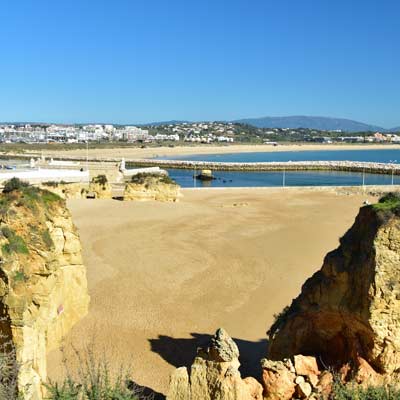
The Praia da Batata overlooks the mouth of the Lagos estuary
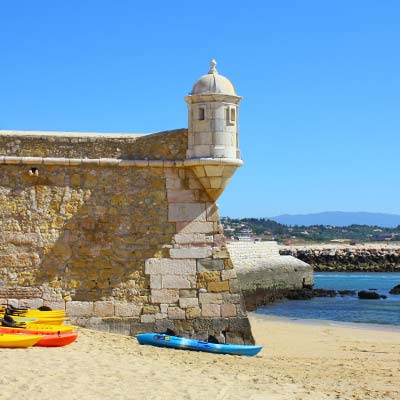
Forte da Ponta da Bandeira has guarded the Lagos estuary since the 17th century
Praia da Batata Tourist Information
Praia da Batata is situated at the mouth of the Rio Bensafrim, close to the Forte da Ponta da Bandeira. It is just a short walk from the main tourist area of Lagos, along the Avenida dos Descobrimentos and the scenic estuary promenade.
Batata is a sheltered beach the eastward-facing direction means it is protected from powerful waves, while the cliffs offer shelter from strong sea breezes on blustery days.
Praia da Batata is a popular beach for families; the waters are safe, it is close to shops and restaurants and during the summer months, it is supervised by lifeguards.
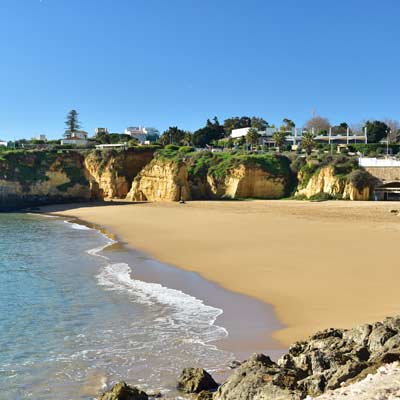
The Batata beach is set amidst the same golden cliffs as the Ponta da Piedade headland, but these cliffs are much lower
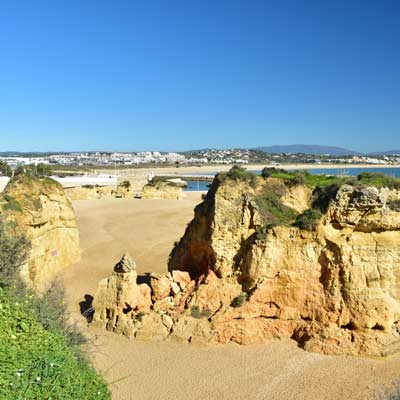
The rocky headland at the southern end of Praia da Batata
The northern edge of the beach is bordered by a long concrete pier, which once formed the Cais da Solaria (Solaria docks); today this area is used for launching kayaks and small sailing boats. At the mouth of the Rio Bensafrim is the historic Fortaleza da Ponta da Bandeira. This squat but solid fort dates from the 17th century and can be entered for a fee of €2.
To the southern end Batata beach is bounded by steep cliffs, and around the headland lies the tiny Praia dos Estudantes beach. On the cliffs above Praia da Batata is the “Mar” restaurant, which is a dependable option for a lunchtime meal.
As the beach faces east and is protected from the Atlantic Ocean by the huge headland, there are almost no waves. Consequently, most Portuguese families allow their children to swim in the still waters.
Discover more of Lagos with our most popular guides


About this guide: I am Philip Giddings. I live in Lisbon with my Portuguese wife, Carla, whose family and friends are in the Algarve, and I am down in Lagos most months to research these guides, which are now my full-time work. I made my first trip to Portugal in 2001 and have written independent guides since 2009.
My Lagos guides are part of a wider set of almost 2,000 I have written across Portugal. No tourist board, tour operator, or attraction pays to be included, and the site is funded by affiliate commissions on tour and accommodation bookings, disclosed on every page that carries them. Every practical detail (ticket prices, opening hours, bus routes, boat-tour policies) is checked against the official sources and confirmed in person on the trips I make through the year. Read my full story here.